

Informações importantes sobre cookies
Ao usar este site, você concorda com o uso de cookies de acordo com nosso
Política de Privacidade.
DEVELOPMENT OF HEALTH AND WELL-BEING
The development of the whole person: academic and intellectual; ethical, moral and social-emotional; and physical, with a focus on well-being. Amongst various school activities, there are four which aim squarely at developing health and well-being that deserve to be highlighted.
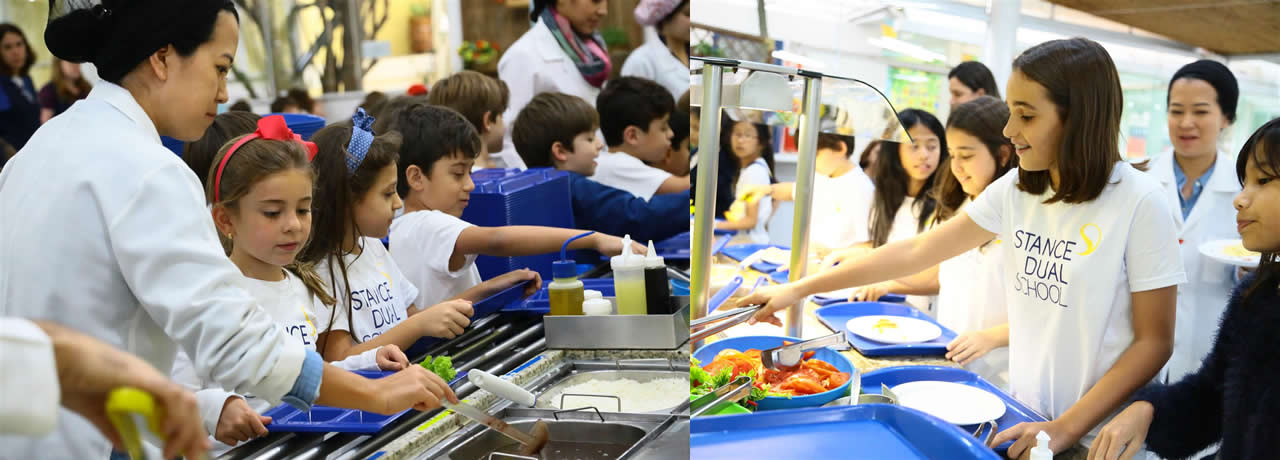
Educational Lunch
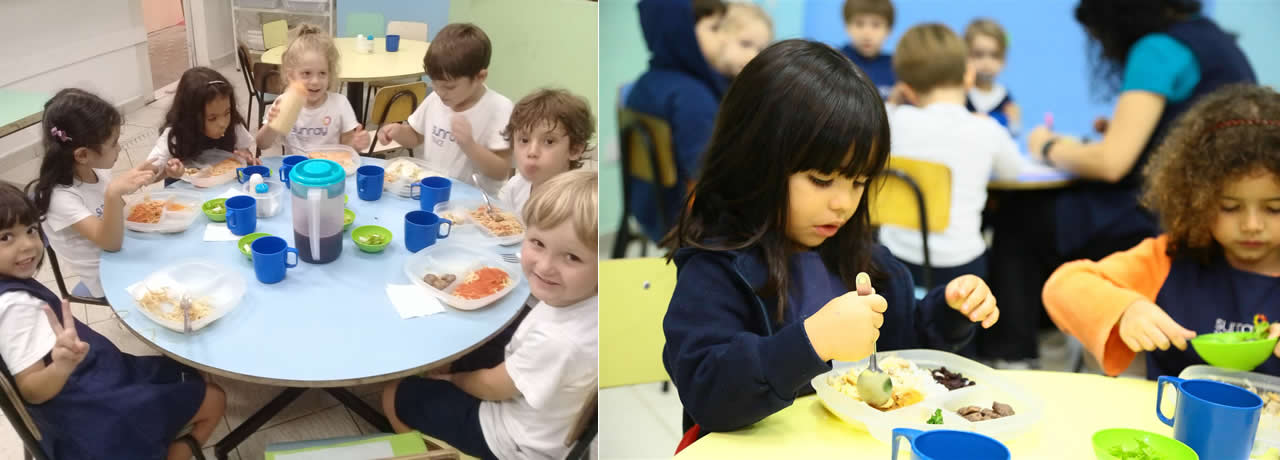
Lunch at school is an activity with important physical and social dimensions in the development of students’ health life choices. The menu is organized by our team of nutritionists, starting from the central value of healthy, homemade, natural food, avoiding industrialized products and integrating whole wheat and multi-grain products more and more (such as pastas and rice), as well as organic vegetables. What is offered to students is always varied and diverse, with many options to make choices, in addition to opening up students’ taste buds with a variety of internationally inspired dishes from cultures around the world.
Beyond our team of nutritionists and cooks, there are always English and Portuguese-speaking teachers and coordinators at lunchtime to provide orientation to students about making healthy choices, as well as to support students to resolve conflicts amongst themselves, develop good manners, minimize food waste and practice English and Portuguese in a space outside of the classroom. All of this is considered when providing a healthy lunch and pleasant, informal moment for spontaneous learning.
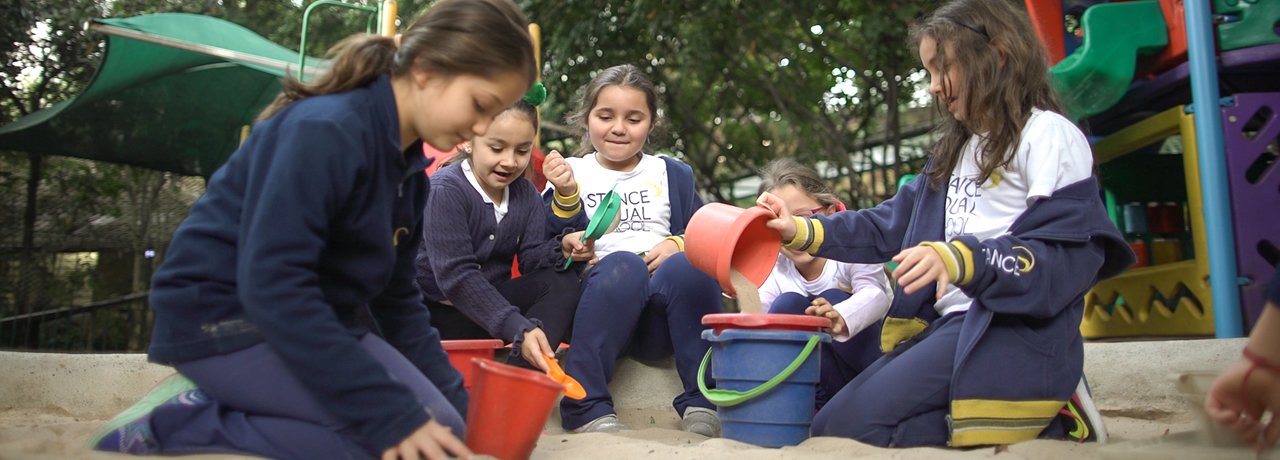
Play Time
Our play time is educational. It is treated as a school initiative to offer a variety of diversified activities, which promote students’ full development in their free moments in which they make their own decisions, with autonomy and liberty . Games and sports offer students the chance to develop physically, improve their motor skills and continuously learn how to be part of a team and mobilize various logical and rational strategies quickly in moments of play.
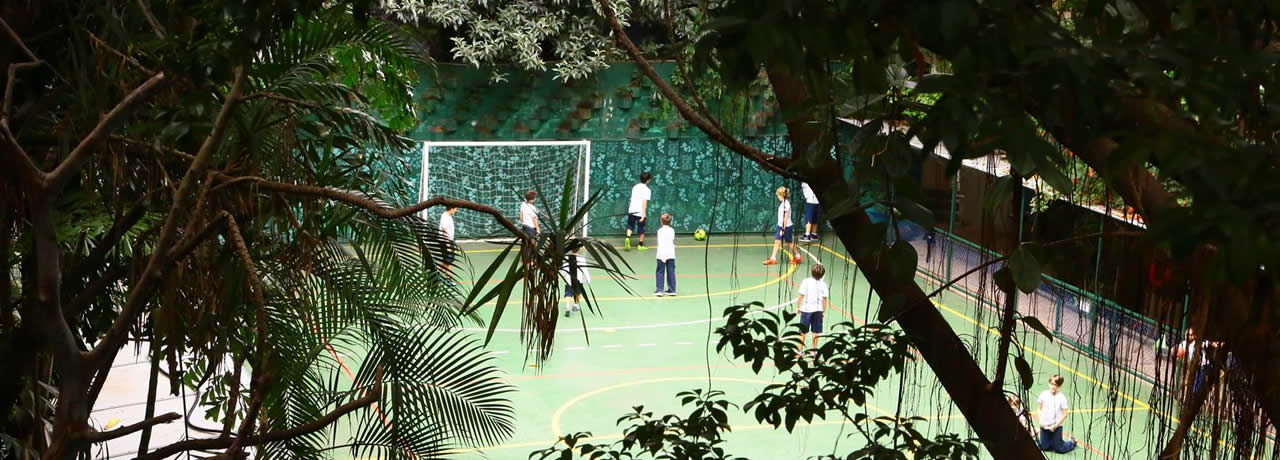
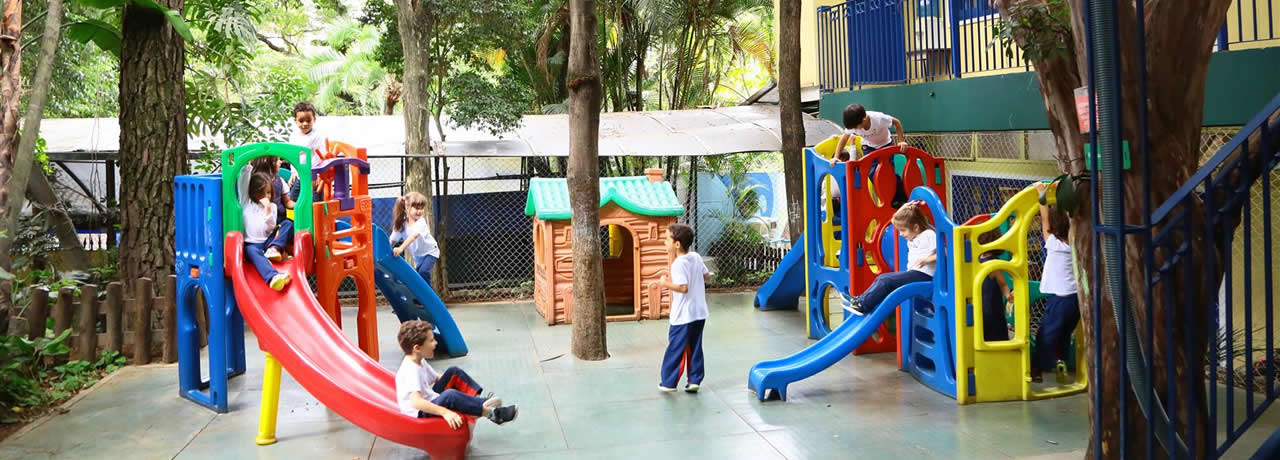
The play time team is made of physical educational teachers who offer a diversity of experiences for students to try out and give orientation to students, particularly to resolve problems and encourage them to try new activities. Play time occurs twice a day, utilizing many different spaces around the school, including three courts, a library and digital learning center, a games and chess space, a re-art center, playgrounds, gardens and an amplitude of green spaces around the school.
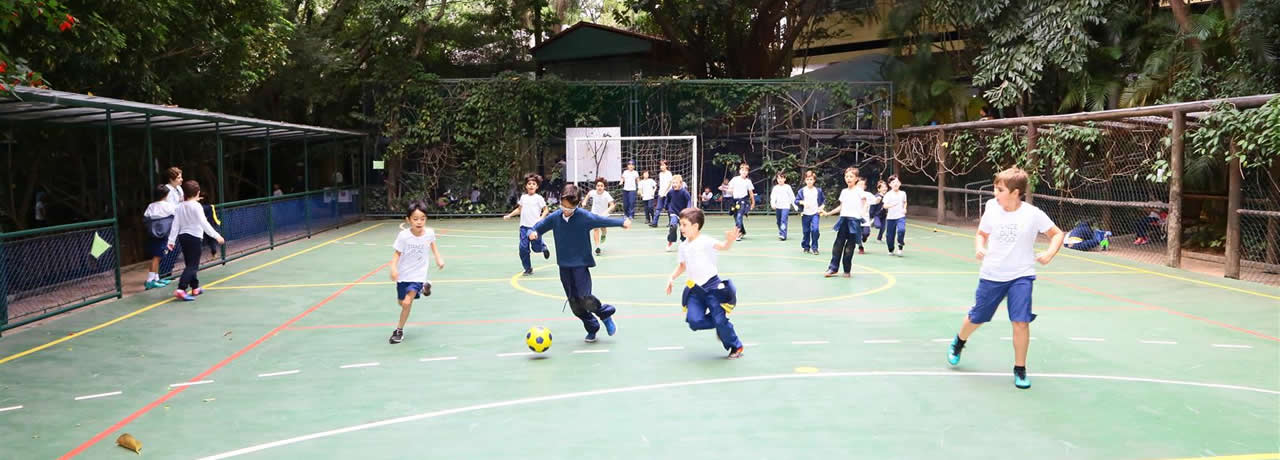
Physical Education
Movement is a child’s first meaningful language to communicate with others and the world. With their bodies children construct their learning by touching, trying, manipulating and experimenting all that is around them.
The work with physical education in preschool takes into account children’s ample motor skill development, affording the possibility for children to explore various spaces with their bodies, stimulating equilibrium and muscle tone for good posture, which is a basis for attention, memory, thought and other cognitive functions necessary for learning at school and in everyday life.
In elementary school students participate in different physical activities for the initiation into sports, always starting from the development of physical and motor abilities for healthy and cooperative practices. Social-emotional growth and ethical values guide teachers’ actions, viewing getting along with others as central to learning and encouraging the development of positive habits and attitudes as important to both emotional and physical balance.
Sports training starts in middle school with handball, volleyball, soccer and basketball, as well as recreational activities and sports-related training exercises. Basic scientific notions related to physiology and movement are worked on throughout the physical education curriculum.
Additionally, from Year 2 onwards, students are invited to participate (as an option) in competitive sports with students from other schools, learning how to compete with good sportsmanship and to deal with both winning and losing gracefully.
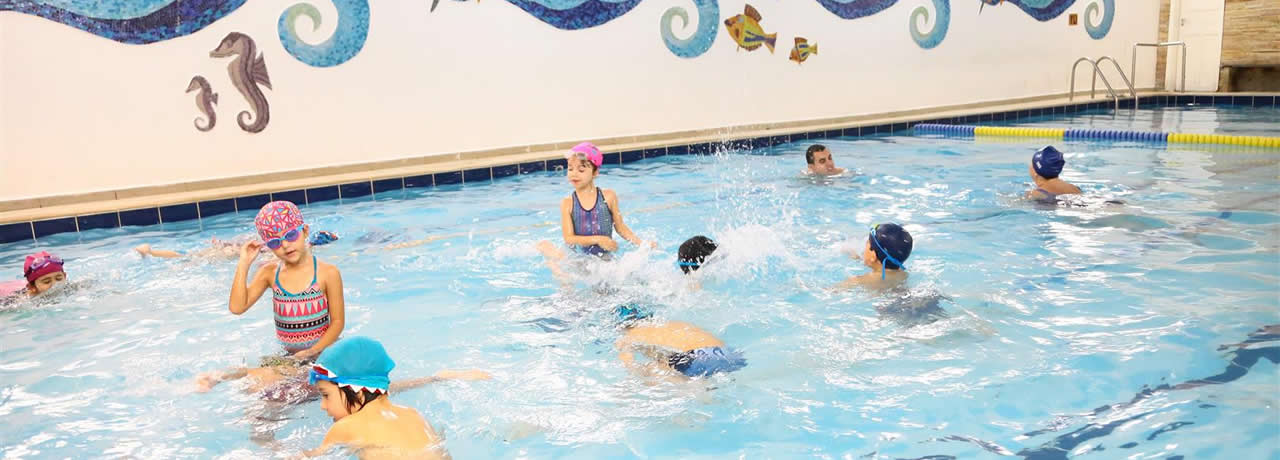
Swimming
Our school pool provides a space for curricular swimming classes, once to twice a week in preschool, twice a week throughout elementary school, and as an optional activity in middle school.
The work developed in preschool is centered on the children discovering who they are, principally in becoming consciously aware of their bodies. In elementary school, students have adapted to the liquid medium of the swimming pool and the classes focus on learning how to swim the crawl, breast stroke, back stroke and butterfly. By Year 5 students have mastered these four strokes and are aware of the health benefits of physical activity in their lives.